Thursday, May 1, 2014

Project Terrapin's Website

Check out the Project Terrapin website at http://www.projectterrapin.org

                                                 Project Terrapin is the home of SCUTES
                                                    our mascot!

Habitat Restoration

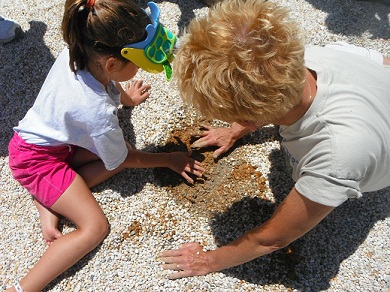
MATES Project Terrapin students reconditioned a terrapin nesting areas along Cedar Run Dock Road that was destroyed during Superstorm Sandy.  The area will be monitored for nesting terrapins this season. 
Students from the Marine Academy of
Technology and Environmental Science's
Project Terrapin reconditioning a terrapin
nesting site at Cedar Run Dock Road on
April 25, 2014

Sunday, September 1, 2013

2013 Nesting Season

As of September 1, we've had 5 nests hatch and we've had an 89% hatch success rate to date.  With a cooler August, we will have hatching and emergence into late September this year.  Below are some hatchlings making their way to the marsh. 
 
Terrapin Hatchlings at N. Sedge Island on August 30, 2013


That was it!  Sixty-six total terrapins and only 29 nests at N. Sedge Island.  It is significantly lower in both captures and nests than in past seasons.  More to follow...

As on July 25, we have a total of 66 nesting females marked and 29 nests moved on Sedge Island.  Since we are at the end of the nesting season, this may be our final tally at N. Sedge Island.  My counterpart on LBI has over 1400 terrapin eggs rescued this year.  Great job to her and the dedicated volunteers that may help to save this species from being extirpated at Barnegat Bay. Hatching to follow...

As of June 19, 2013, we have over 20 nesting female marked and six nests moved on Sedge Island.  Kathy Lacey reported that over 400 eggs were moved to the hatchery on High Bar Harbor on LBI.  See our marked #16 female terrapin.  We marked them with a number after taking our annual measurements so that the female terrapin can nest, possibly come back, and we will not have to disturb her again.  Dont' worry, the paint is temporary and usually only lasts two weeks.  See some neat pictures below...

                                                  Female terrapin (#16) on N. Sedge Island


                                           Clutch of 11 eggs moved from construction on
                                           the east lawn to the hatchery.


                                           Annalee measuring eggs as part of the nesting
                                            ecology study at N. Sedge Island.


                                           Terrapin egg being massed at N. Sedge Island


We are in the midst of nesting season with three nests moved today and a total of 11 terrapins marked for the season.  All eleven occurred this week.  Much more to follow...

Nesting season kicked off with a flury of activity!  This past week has been busy in many locations.  We've only had three terrapins at N. Sedge Island so far, but have seen activity along Island Beach State Park.  Our LBI nesting area is extremely active.  Kathy and her volunteers are working very hard to move nests to the hatchery.    

Female terrapin nesting at Island Beach State Park
                                          on June 12 (code CIJVW) marked back in 2007.
                                          Notice the peeling outer layers of carotene on her
                                          scutes?  This is normal as she has indeterminant
                                          growth (sometimes < 1mm per year). 


Sadly, we've also had reports and encounters with terrapin boat and road mortality.  A large female terrapin was hit by a boat on Sunday June 9 and another on June 11 (all off LBI).  There have also been at least a dozen terrapins or more hit since this past Saturday on LBI and Tuckerton.  Please be terrapin aware! 


We kicked off the 2013 nesting season by releasing 52 "yearlings" at Island Beach State Park that were hatchlings from the Sedge Island Wildlife Management Area rescued in early October 2012.  Some of the terrapins were found also immediately after storm Sandy and released back to their homes.  Thanks to Lacey Middle School, Girard College School (PA), Lavallette Elementary School, Barnegat High School, Southern Regional High School, MATES and Jenkinson's Aquarium for their caring and raising of the hatchlings this year (photos below)...

                                        MATES Project Terrapin Hatchling Team at the release

                                                        Lacey Middle School "yearlings"


                                       Summer assistants Alex and Annalee marking hatchlings

                                      
                                                          Students releasing terrapins

                                                     Terrapin making its way back home!

We also are ready at Sedge for the 2013 nesting season.  It is up to the terrapins now!

Sandy's Effects

September 1, 2013...

  Our nests started to show signs of hatching and emergence.  We've had 5 nests emerge so far with an 89% hatch success rate.  Below is a picture of an emerging hatchling from nest #200.  We did have a reduction in nesting females, but the hatchlings are doing well. 
 
Hatchling from N. Sedge Island, Aug. 30, 2013
 
 
Update August 17, 2013...

We had a significant loss of nesting females at N. Sedge Island this year.  Was it due to Sandy?  We cannot say, but it could be a resutls of displaced female terrapins or loss of nesting area.  Annalee T. (field research assistant and Barnegat Bay Student Grant recipient) did a wonderful job presenting on the summer nesting season.  We are still awaiting the hatchlings (none as of August 15).  We expect them in a week or so as it is a late emerging year for hatchlings!  

Update July 28, 2013...

It seems that Sandy did have an impact on some of the nesting terrapins at North Sedge Island, however, we still had a good number of returning female terrapins.  Normally, we would have an excess of 80 terrapins marked for the year on the Island, but this year we had a total of 66.  Of the 66, 57 were previously marked females, and we had 9 new females that were not marked until this season.  We only had 29 known nests, a far cry from our 40 last year (including numerous unknown nests last year too).  On Sedge, we lost about 38 cubic yards of nesting material from the highest spot on the Island (see below).  We feel that enhancing the nesting area may encourage terrapins to nest in the future and that our nest numbers will be higher starting again next year. 


                                          Loss of sand at the highest area on N. Sedge
                                          Island, which is our most popular nesting
                                          area.


We have been assessing dunes along Island Beach, which suffered significant loss of sand in some places, but did the job in protecting the many back dune habitats, maritime forests, and bay-shore communities.  More terrapin nesting habitat has been created along the bay side areas with sand washed over (westward) from the primary dune structures. 

Sedge Island was hit hard, but the hatchery is up and running as of May 31, 2013, and so is the boat house lab.  We are patiently awaiting the females to come up and nest! 

Kathy Lacey and her awesome group of terrapin volunteers is conducting a massive clean-up on High Bar as part of Clean Ocean Action's Back to the Beach plan on Saturday May 18, 2013 from 9 a.m. to 12 p.m. 


Update March 24, 2013

The clean-ups continue.  On March 23, thanks to several volunteers, the fifth wave at High Bar since the storm, picked up small debris items in which we filled at least four full bags and removed some debris. 
                                              Sifting through the debris (top), Kathy working
                                              to pick up the endless plastic pieces, and
                                              volunteers in upper beach zone working to
                                              collect as many pieces of materials as possible.

Clean-ups planned as follows (terrapin habitats)...

 April 6 - Island Beach State Park (dune grass planting and major cleaning  9 a.m. - 12 noon, -  e-mail terrapinstationnj@gmail.com to register) 
April 27- "F" Cove clean up at Trader's Cove (Ocean County Parks, Jersey Paddler and MATES) at 9 a.m. 

Extra-tropical cyclone Sandy left a path of devastation across the entire coastline of New Jersey.

Here is an update as of February 2, 2013...

Island Beach State Park (IBSP), with terrapin nesting habitat, has sustained damage, but it is indicative of barrier island function.  Sands have washed out in some places west into the back dunes and maritime forest areas.  However, despite the shift west, the Park staff and volunteers have been doing a tremendous job in making area accessible once again.  Volunteers and staff have found terrapin carapaces, and are sharing stories of finding dead terrapins as clean-up efforts continue.  We will keep track of these accounts and will continue to support the clean-up and recovery efforts along  marshes, bay beaches, and creeks that serve as critical terrapin habitat.

Our study sites along the mainland part of Barnegat Bay (Forsythe Refuge) have held up well.  The same is true for North Sedge Island (destruction to the docks), but the structures held up okay. 

Reports from Kathy Lacey state that northern parts of LBI (Barnegat Light and High Bar Harbor) have also withstood the devastation, but the amount of debris on the nesting areas is substantial.

Despite the devastation, IBSP is open to Bath House 1 for visitors and we will continue to clean-up our coastal habitats.  We will also be studying the "post-Sandy" effects on populations and nesting ecology.  Stay tuned as we are joining together researchers, students and volunteers to help us with this effort.

Saturday, August 17, 2013

Terrapin Conservation 2013

Congratulations to our own Annalee T. who presented her research on the 2013 nesting season in comparison to past seasons.  Also, we are forming turtle road patrols for next summer at Island Beach State Park.  More to follow...

Signs are up at Barnegat Light, High Bar Habor, and Island Beach State Park.  Now that nesting season is winding down, mid-August will begin the time for hatchlings to emerge and they will sometimes cross the roadway too!

                                        Sign at Island Beach State Park installed in July

LBI and Island Beach State Park, please look out for the new turtle crossing signs.  Also, on LBI, be extra careful around the construction area on Cedar Bonnet as the new bridge construction areas may show a greater density of nesting females trying to cross route 72. 

                                              New signs!  They may be inviting, but they
                                               are very important.  Please keep an eye on
                                               them for us.  Signs at LBI are funded by the
                                               LBI Garden Club. 

Monday, October 1, 2012

2012 Terrapin Nesting Season

The end of the nesting season was on September 25, 2012 with over 500 hatchlings recovered, meaning a 75% hatch success rate at Sedge.  We also outfitted 5 terrapins with depth and temperature sensors that will (hopefully) be recovered in 2013.  Thanks again as we had a great yeat with terrific interns and volunteers.

It is hatching time!  We have recovered over 240 hatchlings as of August 27, 2012 out of 28 nests.  It is a good year so far.  Thanks Jillian, Dylan, Angelica, Estefany, Ryan and Juliet and helping with the hatchling recovery.

                                           Check out our hatchlings that we measure and
                                            release back to the marshes on N. Sedge!

At Sedge, we have moved and protected over 600 eggs with our last female terrapin disgging a nest on Tuesday July 17, 2012.  As we wind down the nesting season, hatching and emergence will be in the near future.  Thanks to Lauren, who coordinated the nest relocation project this summer. 


June 22, 2012 we fitted three female terrapins with temperature and depth sensors to determine annual exposure in terms of temperatures and depths that a female would encounter at Barnegat Bay.  We fitted old reliable, AHPW, along with BHIO and NPQW all funded by Exelon Energy Corporation, Oyster Creek.  Nesting season is going very well with 26 known female nests and 6 nests from unknown females.  This puts us at approximately 451 eggs protected as of June 22.  I would like to thank our awesome interns and volunteers for their work...
Lauren, Jackie, Juliet, Ryan, Lisa, Dylan and Jillian!  As of June 30, 2012, we are at 500 eggs and we outfitted terrapin AJVW with a logger (see picture below...).  Her datalogger was sponsored by the students at Cedar Creek Elementary School in Lacey Township as part of their generous donation to Project Terrapin. 


Terrapin code AJVW with transmitter on back left carapace


On Saturday May 26, our first female terrapin was captured on N. Sedge Island (code ACIW).  On Wednesday May 30, we found our first nest and marked two more female terrapins.  We welcome Lauren Cruz from the University of Delaware as a summer student researcher (see below).  Lauren is studying the effects of coastal upwelling events and how the reduced temperatures brought on by upwelling may impact nesting frequency.  We have a new hatchery on the Island as well!  On June 2, our familiar nester, code AHPW, came back to the Island for her tenth consecutive year.  We hope to see her in two weeks to fit her with a temperature and depth datalogger to determine what conditions she is exposed for a year.  We also had a female terrapin nest June 3 that was 2007 grams!  The largest ever measured on N. Sedge Island!

See our new hatchery below... Thanks Tony Raniero for the easy access design and look!


Lauren Cruz installing a "human traffic counter" as part of her terrapin nesting study on N. Sedge Island

2012 LBI Nesting Project

High Bar Harbor had a tremendous hatch success rate this year.  Over 1000 hatchlings emerged out of 1063 eggs.  This is definitely a record in terms of hatch success.  Kathy and her volunteers were tremendous and we look forward to 2013! 

On Tuesday August 10, the first clutches of hatchlings emerged at the High Bar Hatchery!

High Bar sets the Bar High!  Kathy and her amazing team, have rescued over 1000 eggs this year.  The Crimi Hatchery is keeping the eggs safe from predators.   Kathy needs help monitoring the emergence of the hatchlings starting July 23.  Please get involved and take a shift! 

                                           View of terrapin nests protected in one of two
                                              hatcheries on High Bar Harbor, LBI, NJ


Kathy and her High Bar and Barnegat Light Team are working very hard this season.  They've saved over 700 eggs as of June 30 2012.  See below for the latest nest that is being protected on site!  There are 15 sites protected outside of the hatchery!  Thanks to the Crimi's for the addition of a 2nd hatchery.


We will continue our project at the LBI Foundation and also at High Bar Harbor. The goal is to protect terrapin nests from negative human impacts.  Kathy aided by her dedicated team of volunteers already moved over 16 nests from heavily trafficked areas to the hatchery - just June 3, 2012! 

Kathy is locating a terrapin nest on LBI with the aid of Grace


A new hatchery was installed by some very dedicated volunteers (thanks to John Crimi for all of his hard work and generous support) working under the direction of Kathy Lacey.  This is part of the LBI/ High Bar Harbor Conservation Program.

Here are some goals on Long Beach Island...
1) Assess and log terrapin nests with little, to no, impact on the female terrapins
2) Possibly relocate nests in areas with high human traffice (walking and cars)
3) Conduct a mark and recapture study of nesting female terrapins (after they nest)
4) Maintain hatcheries at the LBI Foundation in Loveladies and High Bar Harbor
5) Promote awareness and stewardship of  terrapins and Barnegat Bay, NJ


2012 Upcoming Events

We

Nesting season was long, but we had hatching and emergence on August 10 at LBI, and August 18 at N. Sedge Island. 

Our first female landed and nested on N. Sedge Island at Barnegat Bay (code ACIW) on Saturday May 26 at 1:00 p.m. 

The season has begun and here is what is happening...
The High Bar Terrapin Team (thanks John Crimi) have a great new hatchery and much nesting activity
We just completed the new hatchery at N. Sedge Island on June 2, 2012 (Thanks Tony Raniero)
We are reconditioning the hatchery at the Long Beach Island Foundation of the Arts & Sciences
Long Beach Township just filled sand in an area at the LBIF that may be used by nesting females instead of "having to cross" the main boulevard
We just completed a terrapin nest site enhancement project on Cedar Run Dock Road (see picture below)!

Come out and check out our terrapin conservation display (italicized were completed)...
May 19, 2012 - Ocean Fun Day at Island Beach State Park (Was terrific with over 3000 visitors!)
June 3, 2012 - Barnegat Bay Festival - Island Height, NJ (It seemed that there were 1000's there)
June 9, 2012 - Thanks to all of you who participated in the training
July 6, 2012 - Barnegat Bay Green Day at the LBIF was successful and well attended!
Aug. 22, 2012 - U.S. Coast Guard Open House - Barnegat Light, NJ    A great day with USCG!
Sept. 8. 2012 - Barnegat Township's Pirate Day (all day downtown Barnegat) A nice turnout for sure
Sept. 9, 2012 - Beach Plum Festival at Island Beach State Park (9 a.m. - 4 p.m.)  Awesome as always
Oct. 7, 2012  - Cattus Island  Nature Festival - Wet, but a great turnout
Oct. 11, 2012 - Student Summit Clean Ocean Action IBSP - Over 350 students and great event!

Please contact projectterrapin@gmail.com for any inquiries.

                          Cedar Run Dock Road Terrapin Nesting Enhancement Project

Sunday, August 26, 2012

Terrapin Conservation for 2012

We are 50 bundles from distributing 13,000 BRDs!  A lot more work ahead of us!

At the LBI Foundation on July 6, 2012, The Barnegat Bay Day and Go Green Expo was a success.  Our captive terrapins were a big hit with the crowds.  We must have talked terrapin with a few hundred participants. 


Island Beach State Park Staff trained on June 19, 2012 with John from MATES Project Terrapin.  They helped John to mark animals and to participate in a field activity, collecting terrapins (we captured one).  The Nature Center houses two juvenile terrapins from IBSP for public education that are part of a headstart program through MATES Project Terrapin

                               Staff at Island Beach State Park along with John
                               during terrapin training session.


Thanks to the Garden Club of Long Beach Island for their generous donation of turtle crossing road signs for Barnegat Light and High Bar Harbor, to caution motorists of nesting female terrapins.  Signs were installed in early June 2012. 


                               Turtle crossing sign along Bayview at Barnegat Light Township


Thanks to a generous donation of time and materials from Fernando, an often "overrun" terrapin nesting area was transformed in May 2012 into a terrapin nesting area with reduced human impacts.  Students from the Marine Academy of Technology and Environmental Science (MATES) Project Terrapin helped to plant dune grass to stabilize soil.  Boulders were added to prevent vehicles from parking and trailering boats across the nesting area.

 
A before (left) and after (right) view of the nesting area.  On the right, notice the sand mixed with gravel and tire tracks across the nesting area. On the right, the sand was raked and the site is less accessible by humans, providing nesting female terrapins with less human impacted nesting opportunities.

Wednesday, May 23, 2012

Happy Turtle Day!

Can you spot the turtles in this picture?

Well, it seems like the terrapins living in the Lighthouse Center's canal knew it was their special day, and popped up for a visit/ bask! Thanks to Pola for this great picture!

Sure enough, it seems fitting that our first terrapin sighting of 2012 falls on World Turtle Day! Of course, every day is a reason to celebrate turtles, but here are five things you can keep in mind:

  • Never buy a turtle from a pet shop, as it increases demand from the wild.
  • Never remove turtles from the wild unless they are sick or injured. 
  • If a turtle is crossing a busy street, pick it up and send it in the same direction it was going — if you try to make it go back, it will turn right around again. 
  • Report cruelty or illegal sales of turtles to your local animal control shelter. 
  • Report the sale of any turtle of any kind less than four inches. This is illegal everywhere in the U.S.

These are recommendations from American Tortoise Rescue. Mother Nature Network also wrote a great story about world turtle day which you can find here. Our friend the diamondback terrapin even got a cameo in the article!

World Turtle Day or not, we're very excited to see that Barnegat Bay's terrapins are ready for summer to begin. Soon enough we'll be finding them on nesting beaches (which also means they'll be crossing roads, so drive safely!) and collecting them in our traps. We hope you can come out and join us for what is sure to be a great field season:0)

Wednesday, May 9, 2012

Earthwatch Board Members Visit our Site!

October 20, 2011 was a red-letter day in our research at Barnegat Bay. We had 50 very special visitors come to the Lighthouse Center - The Earthwatch Institute's Executive Board! While many of them have worked behind the scenes to help fund, implement, organize, and support our expeditions, it was very exciting for these board members to see what it is really like to be a volunteer on our project. Some board members were from the main Earthwatch headquarters in Boston, while others traveled from as far as Japan, England, and Brazil for this meeting!

We split into two large groups, with half of the group going out on the R.V. Peter Kilham for a tour of the bay, and half of the group going out in small boats to check traps. In the afternoon, we switched. We really lucked out on weather, and although it was windy, the sun was shining like a day on the bay in August! Because it was so late in the fall, water temperatures are not ideal for terrapins to be swimming around much so we did not expect to catch many in our traps. Low and behold, not only did the board members find terrapins, we caught two NEW captures in our hoop nets - a record for that time of year! You can see in this picture how thrilled everyone was to catch their very first terrapin:
Overall, the visit was incredibly successful, even beyond catching terrapins. It was a wonderful opportunity for the board members to see how all of their hard work pays off for the Earthwath volunteer's experience. In addition, it was neat for us, as scientists, to learn more about the organization behind Earthwatch, and put names with faces. Since, we've felt much more connected to our funding org., and some incredible collaborations have flourished.

Wednesday, May 2, 2012

Injured Terrapins in Barnegat Bay

For the past six summers, Earthwatch volunteers have been essential members of our team. Without volunteers, we would not be capable of trapping and processing the hundreds of diamondback terrapins that we capture each year in the Edwin B. Forsythe Wildlife Refuge. One of the many important findings from our research is that we are catching more injured terrapins each year.

Typically, we go out in small motor boats in the morning to check or set turtle traps. We bring the captured terrapins back to our laboratory which we affectionately refer to as the Marine Station. In the Marine Station, we "process" the terrapins with the help of our Earthwatch volunteers. Basically, this means that we measure (mass and various shell lengths) and mark each individual terrapin with unique codes that allow us to recognize that specific terrapin in case we catch it again in the future. We also check each terrapin for the presence of new or healed injuries. We've been keeping a record of the presence and location of each injury for each individual terrapin since 2006. The most common injuries include missing limbs and shell damage to the carapace (top shell) or plastron (bottom shell). We also frequently capture terrapins with boat propeller injuries. These types of injuries are easy to identify due to the major damage to the carapace and plastron, and most times you can actually see a telltale slash mark through the terrapin.

The figure at the top of this post shows the frequency of major terrapin injury in the northern and the southern parts of the Edwin B. Forsythe Wildlife Refuge over the past six years. Only major injuries are included here, and major injuries were considered to be missing limbs or major damage to the shell, head, or tail. When the Earthwatch project started in 2006, only 13% of the terrapins we captured had major injuries. However, we found that 23 to 24% of the terrapins captured this past summer had major injuries.

Terrapins can obtain injuries from natural and anthropogenic sources. Missing limbs are oftentimes attributed to land predators such as raccoons. Major shell damage tends to be due to anthropogenic (human-generated) impacts such as boat propellers or automobiles. There's not too much that we can do about natural causes of injuries; however, there are some steps we could take to decrease human-caused injuries. Partial or complete closures of some wildlife areas to boating may be necessary to protect terrapins from boat strike injuries. Boating speed limits could also be helpful, especially in sensitive areas such as near nesting beaches. In order to lessen the impact of human-generated injuries on the terrapin population in Barnegat Bay, we need to keep collecting data on terrapins and injury rates. If you want to help save the terrapins, please consider signing up for one of our Earthwatch expeditions. Earthwatch volunteers truly are indispensable members of our research team on the conservation of diamondback terrapins in Barnegat Bay, New Jersey.  


Tuesday, October 11, 2011

2011 New Jersey Society for the Conservation of Diamondback Terrapins


This year, the NJ Society for the Conservation of Diamondback Terrapins recognized Mrs. Dottie Reynolds for her outstanding contribution to the protection of terrapins on Long Beach Island. Dottie lives in an area with a high terrapin nest density, and she assists with females crossing the roadway, keeping them and their future hatchlings out of harms way. Dottie has worked on the LBI terrapin project for the past two years, and is a tremendous supporter of terrapin conservation. When you think about terrapin conservation, you definitely mention Dottie Reynolds in that conversation, every time. Congratulations Dottie and thanks for being so dedicated.

Friday, July 22, 2011

Terrapins in the Shark River? Still unknown


There has been some discussion over the possibility of diamondback terrapins living in the Shark River. Shark River is located in Monmouth County, NJ; it is a relatively small and shallow estuarine basin with no data to support the presence of terrapins. This summer (July 2011), the Marine Academy of Technology & Environmental Science (MATES), Drexel University, and interns with Monmouth University's Urban Coast Institute will pilot a mark and recapture study to hopefully answer this question. We will be working the weeks of July 4, July 18, and July 25 to capture diamondback terrapins.

The first week of trapping was on the south branch of the Shark River basin. The tidal range is great with traps sitting well, then beached during low tide. We caught a large snapping turtle (pictured) close to Brighton Road on July 7. We will resume trapping on July 18 in the north where there is more promising terrapin habitat than in the southern branch.

The second trapping session produced no terrapins during week one (July 17), but we are now concentrating efforts in Shark River Hills off S. Riverside and East End Avenues. After a second full week of trapping, we failed to capture any terrapins in Musquash Cove. Here is what we can report for this project:
1. Not a single terrapin was spotted basking anywhere along the banks of the masrhes
2. Not a single sign of nesting or even predation on nests was observed
3. Not a single terrapin was spotted in the water (which is not the case at Island Beach where we see them frequently)
4. Although trappins produced a snapping turtle, no terrapins were captured using baited hoop traps (in 360 hours of trapping). Compared to Island Beach with 30 terrapins caught in 360 hours).

Therefore, we cannot say "terrapins are not in the Shark River:, however, if terrapins are present, it would be a small population to say the least. Thanks to the Monmouth University students who were dedicated and did an outstanding job this summer!

Thursday, July 21, 2011

2011 LBI Nesting Update


Thanks to the many volunteers that attended our LBI Nest Watch 2011 Program on Sunday May 22. This is part of a nest relocation program scheduled for Long Beach Island at the Long Beach Island Foundation of the Arts and Sciences (LBIF). The Marine Academy of Technology and Environmental Science (MATES), Drexel University, and LBIF are conducting a project to identify nests, mark nests, and move nests that may be in areas with a high possibility of human disturbance. Nests that need to be relocated, will be moved to a hatchery at the LBIF in Loveladies, NJ. There will be an additional volunteer training session once terrapin nesting is underway! Thanks Marc and Jane for their work on June 2. Nicole M. moved a nest from a construction area to the LBIF on June 4. On June 6, Marc and Jane moves two nests and found one nest with 20 eggs in a clutch! This is the new high mark for Barnegat Bay. Today, June 9, another nest was moved to the Foundation. John is helping a female terrapin hit by a car on June 7 and rescued by Dave. Thanks Dave! Stay tuned for the predator project on High Bar Harbor with Kathy!

June 18 was a busy day, the High Bar Harbor Tax Payers Association heard from me and Kathy about the LBIF Project and the threat of raccoon predators. Marc and Jane have been doing a great job in relocating nests and working with Dottie in Barnegat Light. There are eleven nests in the hatcheries at LBIF as of June 18.
As of June 24, there are 15 nests at the LBIF hatchery. On June 24, we marked 8 females that nested at High Bar Harbor, Barnegat Light, and North Beach. Thanks to Jane and Marc for their tireless efforts in Barnegat Light, and look for Kathy's terrapin nest predator prevention project at High Bar Harbor.
Next on the schedule is our hatchling watch at the Foundation and recovery of emerged terrapins for release back to the wild. Contact John if you would like to survey the hatchery at the LBIF to check for emerged hatchlings. Nest #1 and Nest #5had hatchlings on August 9 and 10! Nest #14 produced hatchlings on Friday August 11 and Sarah called to report more on August 13. We've had over 64 hatchlings as per August 20, 2011. We excavated several nests on August 25, 2011 in preparation of Hurricane Irene. Of five nests, we were able to rescue 14 hatchlings. Nests #30 and #31 contained eggs that looked good. All other nests were assessed and hatchlings removed at the LBIF. We had a volunteer recognition ceremony on October 11 at the MATES school (see photo above) and we thanked our tremendous volunteers for their time and dedication to the conservation of terrapins!
Contact Dr. John Wnek for more information (projectterrapin@gmail.com).

Check out the LBI Foundation of the Arts and Sciences Science Website http://www.lbifscience.org/ProjectTerrapin.htm

Sunday, June 5, 2011

Terrapin Outreach and Education


Look for us at Ocan Fun Day on Saturday May 19, 2012 from 11 a.m. - 3 p.m.  and the 15th Annual Barnegat Bay Festival on Sunday June 3, 2012 at Island Heights, NJ

Bycatch reduction device (BRD) distribution (free) is with the purchase of new crab pots at Lacey Marine, Square Deal Hardware, L & H Woods and Water, and West Marine

Tuesday, May 31, 2011

The 2011 Barnegat Bay Nesting Season


On May 31, there were multiple reports of terrapins nesting at Barnegat Bay, New Jersey. Four marked adult female terrapins were captured on North Sedge Island and three of them dug nests. At Long Beach Island, two female terrapins nested. At LBI, we were not able to identify the nesting. The first days of June, we had ten female terrapins captured and six identified nests. On June 4, Nicole M. moved a nest from Cedar Bonnet Island to the LBIF hatchery and marked a female at LBIF! This week, June 5, Jane and Marc volunteered much time at Barnegat Light. They found a nest with a clutch size of 20 eggs!
At Sedge on June 10, it was the annual "terrapin arribada" with 23 females coming ashore. Five nests were moved and 17 females came up after 12 noon! It was a busy day. The previous night, it seems that the mink returned to the Island and destroyed all reference nests outside of the hatchery. Five known nests were predated. After Jules used her night vision camera, it was determined that a raccoon has inhabited the Island and is wreaking havoc on terrapin nests, and other wildlife on the Sedge. We will be humanely trapping the raccoon the week of June 20.
There has been no success trappin the raccoon this part week; however, nesting picked up on Sedge with 12 terrapins making landfall on June 23 and June 24. There are a total of 33 nests on the Island this year so far. On June 25, we had two terrapin nests on Sedge Island with 20 eggs each! This is new record. Terrapin AHPW produced 20 eggs on June 24. Terrapin AJKQW produced 20 eggs on June 25!
On July 3, the nesting season is coming to a close but we will still see some terrapins coming up from time to time for the next two weeks. Thanks to our fantasic volunteers.

On July 8, AHPW came back to dig her third nest of the season. She deposited 16 eggs! Way to go AHPW - one of originally marked terrapins from 2002! Next up will be our hatchling recovery program! On July 21, we assessed an early nest that has eggs that are incubating well. Our first nest produced emerged hatchlings at Sedge on August 10, 2011 with nests 1 and 2 producing hatchlings on consecutive days. We had two more nests with full incubation and emergence at Sedge. On August 20, nests 12 and 23 produced a total of 29 hatchlings out of a 29 eggs. On August 24, we completed a hatchery assessment with all nests in the 10's and 20's. Overall, we recovered over 70 hatchlings. Sadly, on August 31, we assessed the hatchery on N. Sedge Island and Hurricane Irene claimed the remaining nests. Washover from the storm knocked over the protection cages. It seems that some of the hatchlings were able to emerge; however, it seems that some predators were able to access the hatchery when the water was high (i.e., mink).

Wednesday, May 25, 2011

Horseshoe Crab Poaching

Although most of our research is focused on diamondback terrapins, we try to never lose sight of the fact that by helping the terrapins hopefully we are also conserving the other organisms in the bay. Horseshoe crabs just so happen to be one of my favorite creatures in Barnegat Bay (other than terrapins, of course!). We commonly catch horseshoe crabs in our fyke nets when we're trapping terrapins. We've also found horseshoe crab hatchlings on Conklin Beach which is one of our terrapin nesting sites. These crabs are commonly referred to as living fossils because they have changed very little in the past 250 million years. Horseshoe crab populations are dwindling due to the high numbers of crabs that are harvested for bait and fertilization. Luckily, in 2008, the state of New Jersey banned the harvest of horseshoe crabs. Unfortunately, some people still try to harvest horseshoe crabs even though there are regulations forbidding this practice. Three individuals were just caught in Ocean City, NJ on Monday poaching horseshoe crabs. Thank goodness someone called the police!

Thursday, May 5, 2011

Ouch! Even more terp injuries ...

Over the past five summers (2006 to 2010), we've captured over 2,000 terrapins in the Edwin B. Forsythe National Wildlife Refuge. Of those turtles, 17.4% have scars or open wounds from past or present injuries. Many of these injuries were caused by predators or by anthropogenic sources such as automobiles or boat propellers. I've always been interested in boat injuries considering that most of my research is based on the effects of recreational boat sounds on terrapin behavior. Of the injured terrapins we've captured in Forsythe, 18.9% of those injuries were attributed to boat propellers. It's pretty easy to tell if an injury was caused by boat strike because there is a slash mark in the terrapin's shell from the propeller. Typically, these injuries cause major damage in both the carapace (top shell) and plastron (bottom shell).

I apologize for the graphic photos, but this is yet another example of why the terrapins in Barnegat Bay need your help. Sign up for an expedition to help save the terps this summer!

Thursday, April 28, 2011

Abby's visual ecology research

Hello terrapin enthusiasts!

Wow, so much has happened this year, I don't even know where to start!

First of all, the Drexel terrapin crew went to Chauvin, LA in November to present our research findings at the diamondback terrapin working group symposium on the ecology, status, and conservation of the diamondback terrapin. We learned a great deal about other kinds of studies being conducted on the terrapin; most of all though, we learned how much we still don't know about the terrapin, and more research is necessary to gain a greater understanding.

Over the Summer of 2010 I collected over 500 reflectance spectra from more than 60 individual terrapins. From these data I have been able to compare coloration within and among individuals, as well as model the visual system of the terrapin. From these analyses and from previous research on turtle vision, I speculate that terrapins have tetrachormatic vision (UV, blue, green, red), and communicate across all color channels, especially in the UV. Intra- and inter-specific signaling in the UV has been documented in flower-pollinator relationships as well as a signal communicating fitness to potential mates (e.g. birds, jumping spiders, ocellated lizards).


In addition to the vision modeling, I have processed most of my blood and tissue samples. I hope to finish these up and send them out for genotyping so I can correlate possible differences in reproductive success with differences in phenotype (coloration). If UV patterning or coloration is a signal of fitness in the terrapin, then I may find that terrapins with a brighter UV signal may have higher reproductive success.


On top of all this, last March I completed my written candidacy exam, and on April 12 completed my oral exam to become a PhD candidate! Now that I am a candidate, the work has really started!

This Summer I hope to gather more reflectance spectra data, blood samples and hatchling tissue samples for genotyping, as well as design a system for measuring in situ underwater irradiance. But the only way this can be done is if you sign up to become an Earthwatch volunteer! Not only will you help me collect data to elucidate the visual ecology of the terrapin, you will get to join one of the research staff everyday to collect, track, and release terrapins. Some weeks we collect almost 100 terrapins! That's a lot of processing...so come sign up and help us out!